

Best Changes to Increase Website Conversions Fast.


Best Changes to Increase Website Leads Fast
4 min readCRO · Quick Wins · Conversion
Most businesses looking for faster conversions assume the answer is a new website. It almost never is. The changes that produce the fastest results are almost always the smallest — a headline rewritten to speak to the visitor's problem, a contact form stripped back to three fields, a phone number moved above the fold, a page that loads in two seconds instead of six. These aren't glamorous changes. But they're the ones with the most immediate, measurable impact.
Get a 76% Conversion rate increase from headline and CTA changes alone
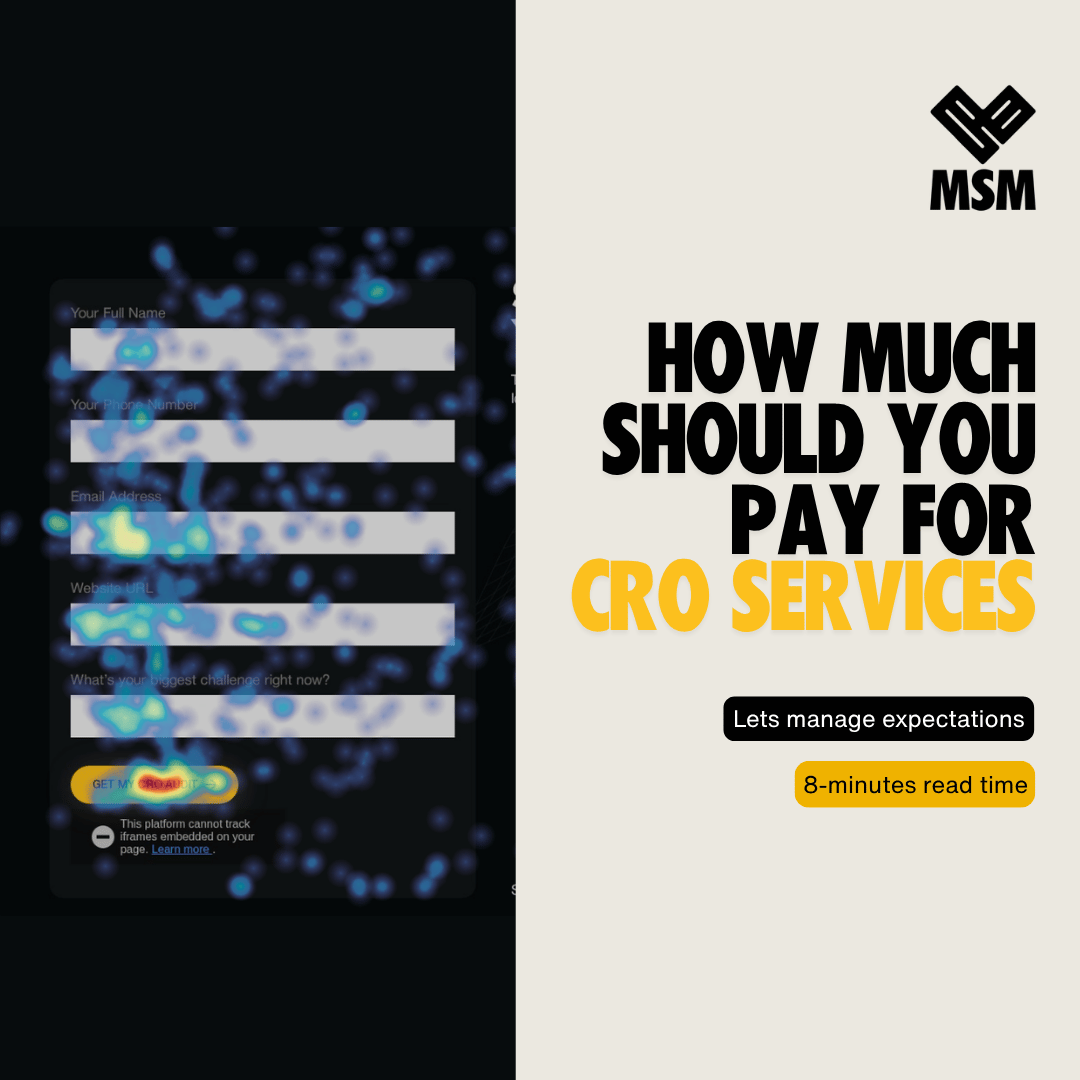
get 50% More form completions from reducing fields from four to three
The fastest conversion improvements come from fixing the headline, reducing form fields to three, making your call to action the only obvious action on the page, and improving page load speed. These four changes consistently produce measurable lift within days and require no redesign. Chip away at these four things and you will see better lead conversions.
Highest impact single change available
Rewrite your headline around the visitor's problem
The average visitor decides whether to stay or leave in under five seconds. Your headline is doing almost all of the work in that window. A headline that opens with your company name or your years of experience tells the visitor nothing useful. One that names the specific problem they arrived with keeps them reading.
Studies consistently show that clear, problem-focused headlines improve conversions by up to 30%. In one documented case, a telecom company recorded a 76% increase in conversion rate from headline and CTA changes alone — no new traffic, no redesign. Just different words in the right place.
02: Zero cost to implement and move your strongest proof above the fold
Your best testimonial, Google rating, or case study result should be visible without scrolling. Most visitors won't scroll far enough to find proof buried halfway down a page — which means you're asking them to trust you before you've given them a single reason to.
Adding customer proof above the fold consistently produces measurable conversion uplift in controlled tests. That might sound incremental until you apply it to a page receiving 2,000 visitors a month at a £2,000 average contract value. The revenue difference compounds quickly.
03: Up to 50% more completions and reduce your contact form to three fields maximum
HubSpot's analysis of over 40,000 landing pages found that three-field forms produced the highest conversion rates — just over 25%. Going from three fields to four produced a sharp decline. Reducing from four fields back to three can increase form completions by nearly 50%.
Every field you add costs you enquiries. Name, email, and a brief message is enough to start a conversation. Everything else can wait for the call. The goal of your contact form isn't to collect data — it's to get the conversation started. The 2024 HubSpot study also found that each additional form field reduces conversion rate by an average of 4.1%. That's a measurable cost per field.
04: 7–20% lift per second recovered and fix your page load speed
A one-second delay in page load time reduces conversions by 7% on desktop. On mobile, that figure rises to as much as 20% per second. A page taking four seconds to load on a phone has already lost a significant proportion of the visitors who would have converted — before they've seen a word of your content.
Run your site through Google PageSpeed Insights today. It's free, it's specific, and it tells you exactly what to fix. This is consistently the highest-leverage technical change available — and one of the few that requires no copywriting, no design work, and no A/B testing to validate. The data shows you the problem. You fix it. The improvement is immediate.
05: Removes decision paralysis and define one primary call to action
When visitors are given too many choices, they make none. Hick's Law — established in behavioural psychology — shows that decision time increases with the number of options available. On a web page, that extra decision time almost always becomes abandonment.
One clear, prominent action repeated at the right moments in the page consistently outperforms a page offering multiple routes. Remove anything that isn't your primary conversion goal, measure what happens to your enquiry rate over 30 days, and you'll rarely want to add it back.
One clear, prominent action repeated at the right moments in the page consistently outperforms a page offering multiple routes. Remove anything that isn't your primary conversion goal, measure what happens to your enquiry rate over 30 days, and you'll rarely want to add it back.
Find Out Which Changes Will Move Your Numbers Most.
We audit your site and prioritise changes by impact — so you fix the right things first, not just the obvious ones.